Managing Your Scarcest Resources
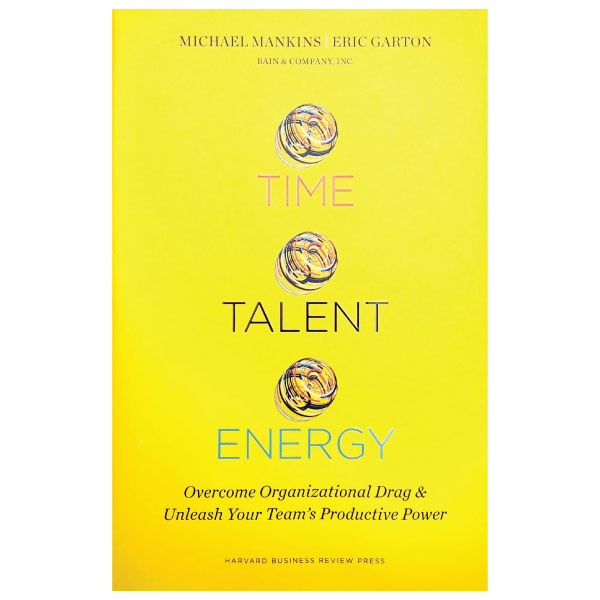
Business leaders know that the key to competitive success is smart management of scarce resources. That's why companies allocate their financial capital so carefully. But capital today is cheap and abundant, no longer a source of advantage. The truly scarce resources now are the time, the talent, and the energy of the people in your organization--resources that are too often squandered. There's plenty of advice about how to manage them, but most of it focuses on individual actions. What's really needed are organizational solutions that can unleash a company's full productive power and enable it to outpace competitors.
Building off of the popular Harvard Business Review article "Your Scarcest Resource," Michael Mankins and Eric Garton, Bain & Company experts in organizational design and effectiveness, present new research into how you can liberate people's time, talent, and energy and unleash your organization's productive power. They identify the specific causes of organizational drag--the collection of institutional factors that slow things down, decrease output, and drain people's energy--and then offer a pragmatic framework for how managers can overcome it. With practical advice for using the framework and in-depth examples of how the best companies manage their people's time, talent, and energy with as much discipline as they do their financial capital, this book shows managers how to create a virtuous circle of high performance.

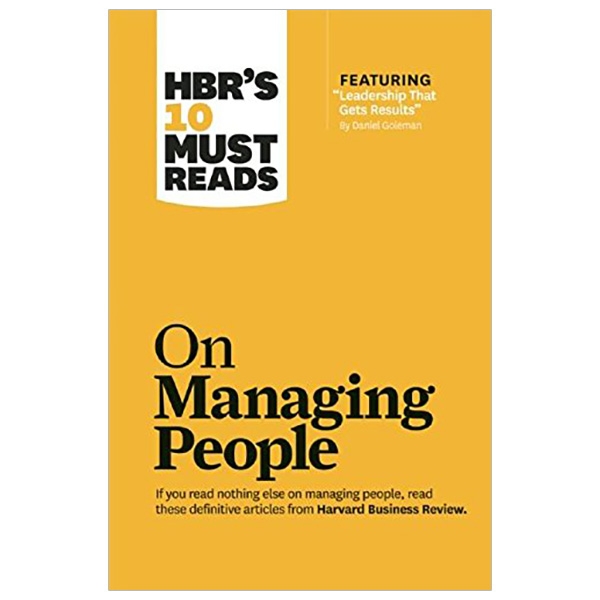
Managing people is fraught with challenges―even if you're a seasoned manager. Here's how to handle them.
If you read nothing else on managing people, read these 10 articles (featuring “Leadership That Gets Results,” by Daniel Goleman). We've combed through hundreds of Harvard Business Review articles and selected the most important ones to help you maximize your employees' performance.
HBR's 10 Must Reads on Managing People will inspire you to:
Tailor your management styles to fit your people
Motivate with more responsibility, not more money
Support first-time managers
Build trust by soliciting input
Teach smart people how to learn from failure
Build high-performing teams
Manage your boss
This collection of best-selling articles includes: featured article "Leadership That Gets Results" by Daniel Goleman, "One More Time: How Do You Motivate Employees?" "The Set-Up-to-Fail Syndrome," "Saving Your Rookie Managers from Themselves," "What Great Managers Do," "Fair Process: Managing in the Knowledge Economy," "Teaching Smart People How to Learn," "How (Un)ethical Are You?" "The Discipline of Teams," and "Managing Your Boss."

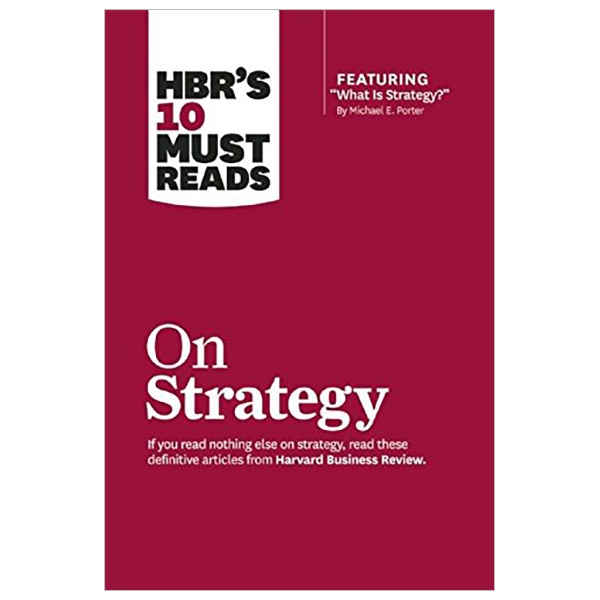
Is your company spending too much time on strategy development―with too little to show for it?
If you read nothing else on strategy, read these 10 articles (featuring “What Is Strategy?” by Michael E. Porter). We've combed through hundreds of Harvard Business Review articles and selected the most important ones to help you catalyze your organization's strategy development and execution.
HBR's 10 Must Reads on Strategy will inspire you to:
Distinguish your company from rivals
Clarify what your company will and won't do
Craft a vision for an uncertain future
Create blue oceans of uncontested market space
Use the Balanced Scorecard to measure your strategy
Capture your strategy in a memorable phrase
Make priorities explicit
Allocate resources early
Clarify decision rights for faster decision making
This collection of best-selling articles includes: featured article "What Is Strategy?" by Michael E. Porter, "The Five Competitive Forces That Shape Strategy," "Building Your Company's Vision," "Reinventing Your Business Model," "Blue Ocean Strategy," "The Secrets to Successful Strategy Execution," "Using the Balanced Scorecard as a Strategic Management System," "Transforming Corner-Office Strategy into Frontline Action," "Turning Great Strategy into Great Performance," and "Who Has the D? How Clear Decision Roles Enhance Organizational Performance."

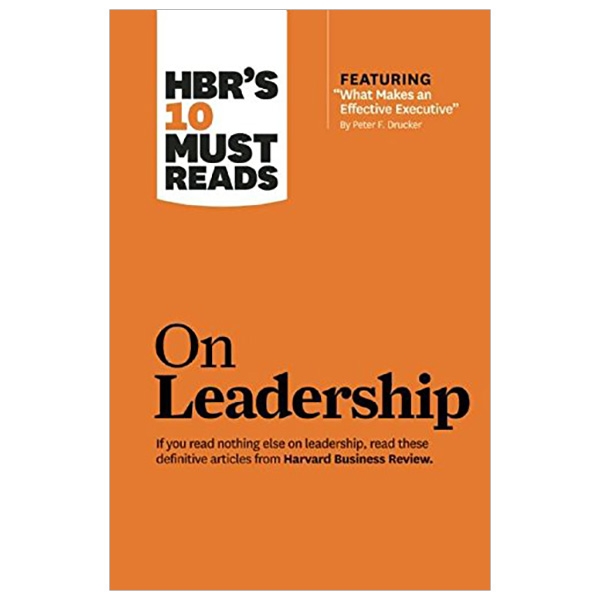
HBR's 10 Must Reads On Leadership
Go from being a good manager to an extraordinary leader.
If you read nothing else on leadership, read these 10 articles (featuring “What Makes an Effective Executive,” by Peter F. Drucker). We've combed through hundreds of Harvard Business Reviewarticles on leadership and selected the most important ones to help you maximize your own and your organization's performance.
HBR's 10 Must Reads On Leadership will inspire you to:
- Motivate others to excel
- Build your team's self-confidence in others
- Provoke positive change
- Set direction
- Encourage smart risk-taking
- Manage with tough empathy
- Credit others for your success
- Increase self-awareness
- Draw strength from adversity
This collection of best-selling articles includes: featured article "What Makes an Effective Executive" by Peter F. Drucker, "What Makes a Leader?" "What Leaders Really Do," "The Work of Leadership," "Why Should Anyone Be Led by You?" "Crucibles of Leadership," "Level 5 Leadership: The Triumph of Humility and Fierce Resolve," "Seven Transformations of Leadership," "Discovering Your Authentic Leadership," and "In Praise of the Incomplete Leader."

"Khanna has written an objective and insightful comparison of China and India. His analysis of Indian developments is particularly outstanding, because it is based on his firsthand experiences in India. But he does not hold back in his praise of Chinese successes. The result is a very fair-minded report on the two Asian giants."-- Foreign Affairs
"Khanna delivers a dense but lively blend of anecdotes and analysis. He shows how entrepreneurial spirit is transforming both these countries not only economically, but strengthening ties between the two." -- Newsweek
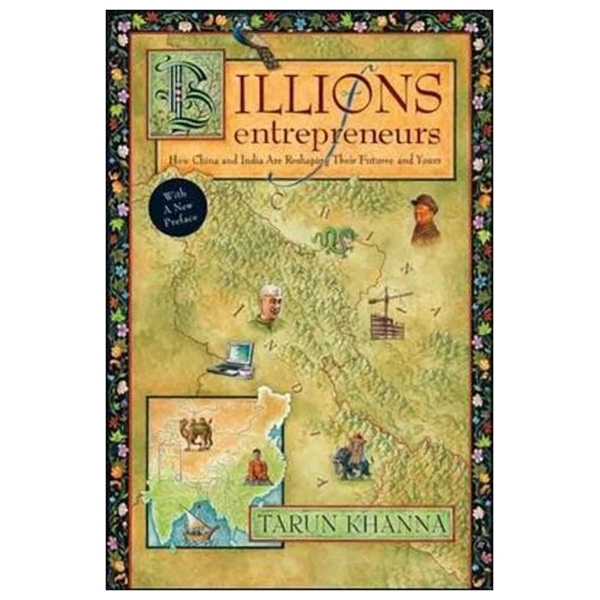
Much attention is being paid to business opportunity in China and India, the world's most populous nations. According to Tarun Khanna, it's the new entrepreneurial emergence of these two nations that will have the greatest impact on business, politics, and global society as a whole.
Billions of Entrepreneurs is an elegantly written book that mixes on-the-ground stories with thorough research to show how Chinese and Indian entrepreneurs are creating change through new business models, and bringing hope to countless people across the globe.

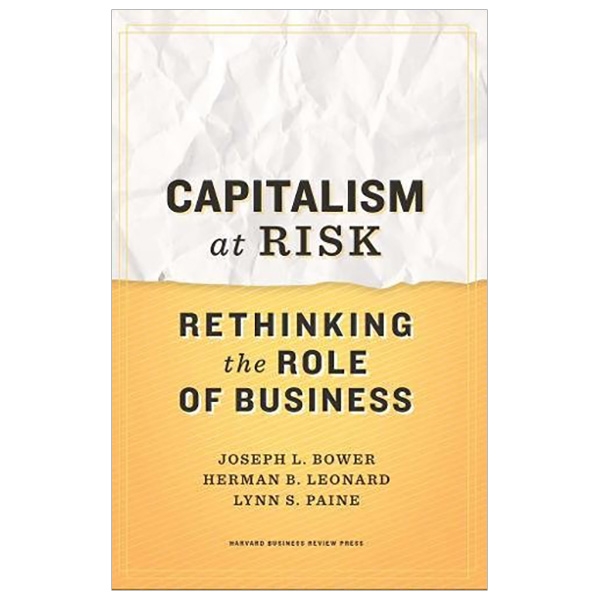
The spread of capitalism worldwide has made people wealthier than ever before. But capitalism’s future is far from assured. The global financial meltdown of 2008 nearly produced a great depression. Economies in Europe are still teetering. Income inequality, resource depletion, mass migrations from poor to rich countries, religious fundamentalism—these are just a few of the threats to continuing prosperity.
How can capitalism be sustained? And who should spearhead the effort? Critics turn to government. In Capitalism at Risk, Harvard Business School professors Joseph Bower, Herman Leonard, and Lynn Paine argue that while governments must play a role, businesses should take the lead. For enterprising companies—whether large multinationals, established regional players, or small start-ups—the current threats to market capitalism present important opportunities.
Capitalism at Risk draws on discussions with business leaders around the world to identify ten potential disruptors of the global market system. Presenting examples of companies already making a difference, the authors explain how business must serve both as innovator and activist—developing corporate strategies that effect change at the community, national, and international levels.
Filled with rich insights, Capitalism at Risk presents a compelling and constructive vision for the future of market capitalism.

Doing Business Globally
FEATURING INTERVIEWS WITH:
John Abele, Boston Scientific
Sir David Bell, Pearson
Sir Michael Rake, BT Group
Dame Anita Roddick, The Body Shop International

Intimidated by corporate finance? The numbers (and the jargon) can feel overwhelming--but you have to understand them to manage effectively. Finance Basics explains the fundamentals simply and quickly, introducing you to key terms and concepts such as:
- How to navigate financial statements
- How to weigh costs and benefits
- What’s involved in budgeting and forecasting
- How to gauge a company's financial health
Don't have much time? Get up to speed fast on the most essential business skills with HBR's 20-Minute Manager series. Whether you need a crash course or a brief refresher, each book in the series is a concise, practical primer that will help you brush up on a key management topic. Advice you can quickly read and apply, for ambitious professionals and aspiring executives--from the most trusted source in business. Also available as an ebook.

A well-crafted business plan generates enthusiasm for your idea and boosts your odds of success--whether you're proposing a new initiative within your organization or starting an entirely new company. Creating Business Plans quickly walks you through the basics. You'll learn to:
Present your idea clearly
Develop sound financial plans
Project risks--and rewards
Anticipate and address your audience's concerns
Don't have much time? Get up to speed fast on the most essential business skills with HBR's 20-Minute Manager series. Whether you need a crash course or a brief refresher, each book in the series is a concise, practical primer that will help you brush up on a key management topic. Advice you can quickly read and apply, for ambitious professionals and aspiring executives--from the most trusted source in business. Also available as an ebook.

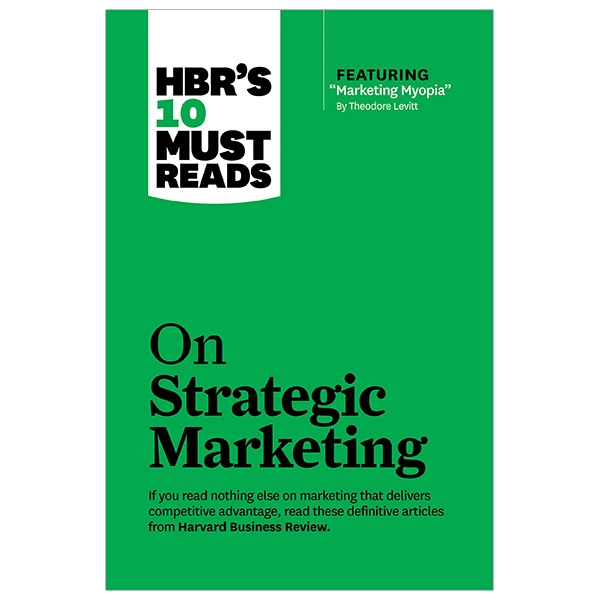
HBR's 10 Must Reads On Strategic Marketing
Stop pushing products―and start cultivating relationships with the right customers.
If you read nothing else on marketing that delivers competitive advantage, read these 10 articles. We’ve combed through hundreds of articles in the Harvard Business Review archive and selected the most important ones to help you reinvent your marketing by putting it―and your customers―at the center of your business.
Leading experts such as Ted Levitt and Clayton Christensen provide the insights and advice you need to:
- Figure out what business you’re really in
- Create products that perform the jobs people need to get done
- Get a bird’s-eye view of your brand’s strengths and weaknesses
- Tap a market that’s larger than China and India combined
- Deliver superior value to your B2B customers
- End the war between sales and marketing

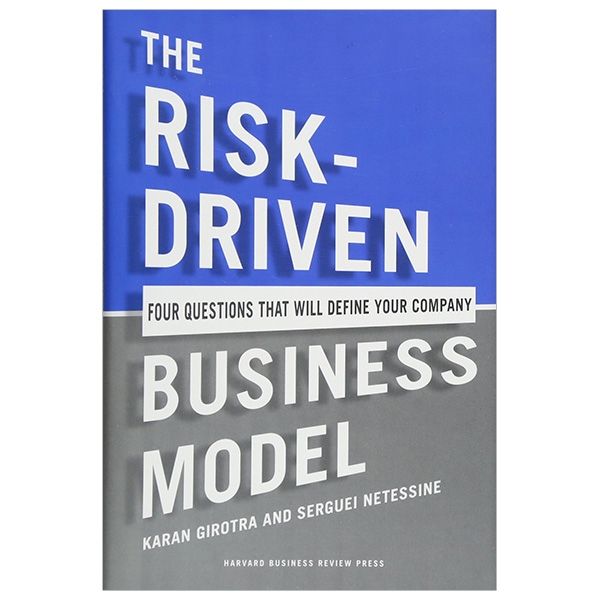
The Risk-Driven Business Model: Four Questions That Will Define Your Company
Risk has been defined as the potential for losing something of value. In business, that value could be your original investment or your expected future returns.
The Risk-Driven Business Model will help you manage risk better by showing how the key choices you make in designing your business models either increase or reduce two characteristic types of risk—information risk, when you make decisions without enough information, and incentive-alignment risk, when decision makers’ incentives are at odds with the broader goals of the company. Leaders who understand how the structure of their business model affects risk have the power to create wealth, revolutionize industries, and shape a better world.
INSEAD’s Karan Girotra and Serguei Netessine, noted operations and innovation professors who have consulted with dozens of companies, walk you through a business model audit to determine what key decisions get made in a business, when they get made, who makes them, and why we make the decisions we do.
By changing your company’s key decisions within this framework, you can fundamentally alter the risks that will impact your business.
This book is for entrepreneurs and executives in companies involved in dynamic industries where the locus of risk is shifting, and includes lessons from Zipcar, Blockbuster, Apple, Benetton, Kickstarter, Walmart, and dozens of other global companies.
The Risk-Driven Business Model demystifies business model risk, with clear directives aimed at improving decision making and driving your business forward.

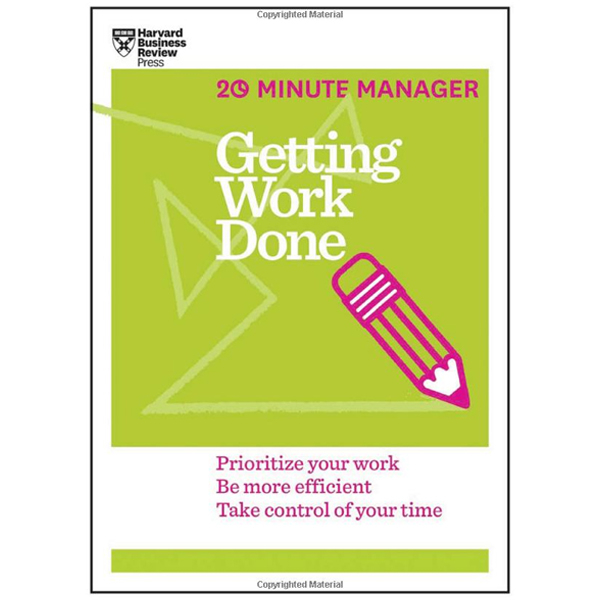
Getting Work Done (HBR 20-Minute Manager Series)
Overwhelmed by the sheer volume of work you need to accomplish? Being pulled in different directions by competing priorities? Getting Work Done runs you through the basics of being more productive at work. You’ll learn to:
- Align your schedule with your priorities
- Focus your attention and avoid distractions
- Create effective daily routines
- Set boundaries and learn to say no
Don't have much time? Get up to speed fast on the most essential business skills with HBR's 20-Minute Manager series. Whether you need a crash course or a brief refresher, each book in the series is a concise, practical primer that will help you brush up on a key management topic. Advice you can quickly read and apply, for ambitious professionals and aspiring executives--from the most trusted source in business. Also available as an ebook.

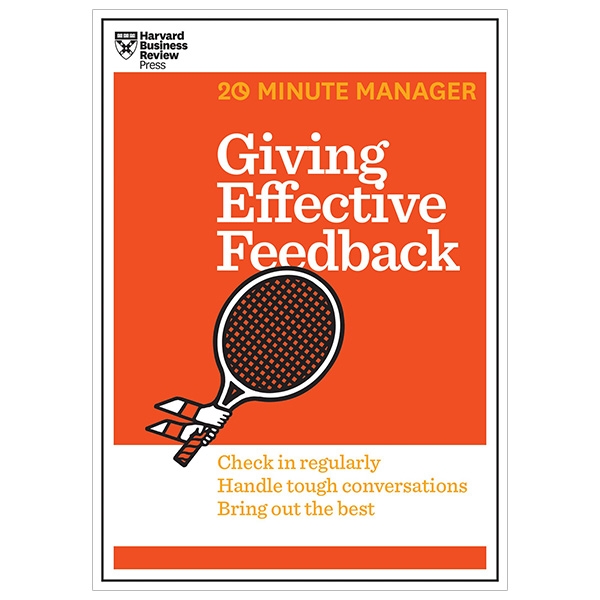
Whether you're dealing with a problem employee or praising the good work of a colleague, you need to communicate in a way that promotes positive change in others. Giving Effective Feedback quickly walks you through the basics of delivering feedback that gets results, including:
- Choosing the right time to talk
- Engaging in productive dialogue
- Helping both star and struggling performers
- Developing a plan for effective follow-up
Don't have much time? Get up to speed fast on the most essential business skills with HBR's 20-Minute Manager series. Whether you need a crash course or a brief refresher, each book in the series is a concise, practical primer that will help you brush up on a key management topic. Advice you can quickly read and apply, for ambitious professionals and aspiring executives--from the most trusted source in business. Also available as an ebook.

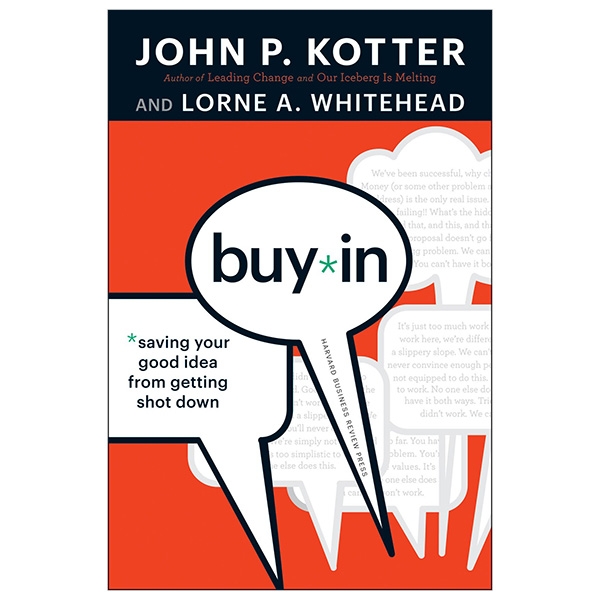
Buy-In: Saving Your Good Idea From Getting Shot Down
You've got a good idea. You know it could make a crucial difference for you, your organization, your community. You present it to the group, but get confounding questions, inane comments, and verbal bullets in return. Before you know what's happened, your idea is dead, shot down. You're furious. Everyone has lost: Those who would have benefited from your proposal. You. Your company. Perhaps even the country.
It doesn't have to be this way, maintain John Kotter and Lorne Whitehead. In Buy-In, they reveal how to win the support your idea needs to deliver valuable results. The key? Understand the generic attack strategies that naysayers and obfuscators deploy time and time again. Then engage these adversaries with tactics tailored to each strategy. By "inviting in the lions" to critique your idea--and being prepared for them--you'll capture busy people's attention, help them grasp your proposal's value, and secure their commitment to implementing the solution.
The book presents a fresh and amusing fictional narrative showing attack strategies in action. It then provides several specific counterstrategies for each basic category the authors have defined--including:
- Death-by-delay: Your enemies push discussion of your idea so far into the future it's forgotten.
- Confusion: They present so much data that confidence in your proposal dies.
- Fearmongering: Critics catalyze irrational anxieties about your idea.
- Character assassination: They slam your reputation and credibility.
Smart, practical, and filled with useful advice, Buy-In equips you to anticipate and combat attacks--so your good idea makes it through to make a positive change.

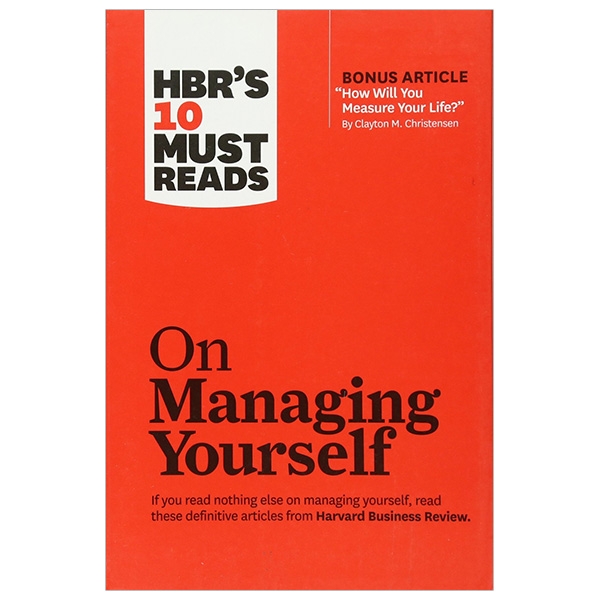
10 Must Reads on Managing Yourself
The path to your professional success starts with a critical look in the mirror.
If you read nothing else on managing yourself, read these 10 articles (plus the bonus article “How Will You Measure Your Life?” by Clayton M. Christensen). We've combed through hundreds of Harvard Business Review articles to select the most important ones to help you maximize yourself/
HBR's 10 Must Reads on Managing Yourself will inspire you to:
- Stay engaged throughout your 50+-year work life
- Tap into your deepest values
- Solicit candid feedback
- Replenish physical and mental energy
- Balance work, home, community, and self
- Spread positive energy throughout your organization
- Rebound from tough times
- Decrease distractibility and frenzy
- Delegate and develop employees' initiative
This collection of best-selling articles includes: bonus article “How Will You Measure Your Life?” by Clayton M. Christensen, "Managing Oneself," "Management Time: Who's Got the Monkey?" "How Resilience Works," "Manage Your Energy, Not Your Time," "Overloaded Circuits: Why Smart People Underperform," "Be a Better Leader, Have a Richer Life," "Reclaim Your Job," "Moments of Greatness: Entering the Fundamental State of Leadership," "What to Ask the Person in the Mirror," and "Primal Leadership: The Hidden Driver of Great Performance."

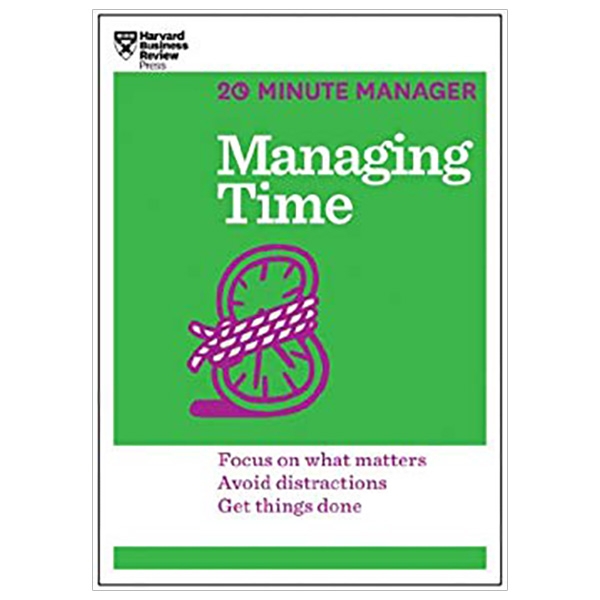
Does it seem like you never have enough time to get everything done? Keeping on top of your tasks, deadlines, and work schedule can be daunting. Managing Time quickly walks you through the basics. You’ll learn to:
- Assess how you spend your time now
- Prioritize your tasks
- Plan the right time to work on each one
- Avoid procrastination and interruptions
Don't have much time? Get up to speed fast on the most essential business skills with HBR's 20-Minute Manager series. Whether you need a crash course or a brief refresher, each book in the series is a concise, practical primer that will help you brush up on a key management topic. Advice you can quickly read and apply, for ambitious professionals and aspiring executives--from the most trusted source in business. Also available as an ebook.

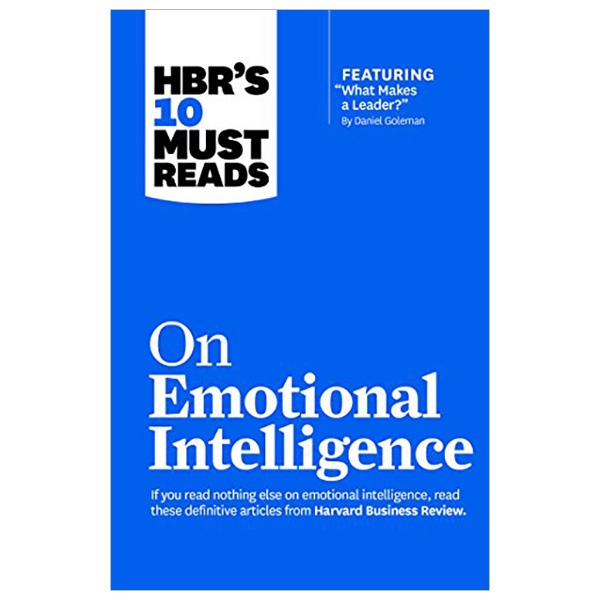
In his defining work on emotional intelligence, bestselling author Daniel Goleman found that it is twice as important as other competencies in determining outstanding leadership.
If you read nothing else on emotional intelligence, read these 10 articles by experts in the field. We’ve combed through hundreds of articles in the Harvard Business Review archive and selected the most important ones to help you boost your emotional skills—and your professional success.
This book will inspire you to:
- Monitor and channel your moods and emotions
- Make smart, empathetic people decisions
- Manage conflict and regulate emotions within your team
- React to tough situations with resilience
- Better understand your strengths, weaknesses, needs, values, and goals
- Develop emotional agility
This collection of articles includes: “What Makes a Leader” by Daniel Goleman, “Primal Leadership: The Hidden Driver of Great Performance” by Daniel Goleman, Richard Boyatzis, and Annie McKee, “Why It’s So Hard to Be Fair” by Joel Brockner, “Why Good Leaders Make Bad Decisions” by Andrew Campbell, Jo Whitehead, and Sydney Finkelstein, “Building the Emotional Intelligence of Groups” by Vanessa Urch Druskat and Steve B. Wolff, “The Price of Incivility: Lack of Respect Hurts Morale—and the Bottom Line” by Christine Porath and Christine Pearson, “How Resilience Works” by Diane Coutu, “Emotional Agility: How Effective Leaders Manage Their Negative Thoughts and Feelings” by Susan David and Christina Congleton, “Fear of Feedback” by Jay M. Jackman and Myra H. Strober, and “The Young and the Clueless” by Kerry A. Bunker, Kathy E. Kram, and Sharon Ting.

Changing hearts is an important part of changing minds. Research shows that appealing to human emotion can help you make your case and build your authority as a leader.
This book highlights that research and shows you how to act on it, presenting both comprehensive frameworks for developing influence and small, simple tactics you can use to convince others every day.
This volume includes the work of:
- Nick Morgan
- Robert Cialdini
- Linda A. Hill
- Nancy Duarte
This collection of articles includes "Understand the Four Components of Influence," by Nick Morgan; "Harnessing the Science of Persuasion," by Robert Cialdini; "Three Things Managers Should Be Doing Every Day," by Linda A. Hill and Kent Lineback; "Learning Charisma," by John Antonakis, Marika Fenley, and Sue Liechti; "To Win People Over, Speak to Their Wants and Needs," by Nancy Duarte; "Storytelling That Moves People," an interview with Robert McKee by Bronwyn Fryer; "The Surprising Persuasiveness of a Sticky Note," by Kevin Hogan; and "When to Sell with Facts and Figures, and When to Appeal to Emotions," by Michael D. Harris.
How to be human at work. The HBR Emotional Intelligence Series features smart, essential reading on the human side of professional life from the pages of Harvard Business Review. Each book in the series offers proven research showing how our emotions impact our work lives, practical advice for managing difficult people and situations, and inspiring essays on what it means to tend to our emotional well-being at work. Uplifting and practical, these books describe the social skills that are critical for ambitious professionals to master.

The importance of achieving focus goes well beyond your own productivity. Deep focus allows you to lead others successfully, find clarity amid uncertainty, and heighten your sense of professional fulfillment.
Yet the forces that challenge sustained focus range from dinging phones to office politics to life's everyday worries. This book explains how to strengthen your ability to focus, manage your team's attention, and break the cycle of distraction.
This volume includes the work of:
- Daniel Goleman
- Heidi Grant
- Amy Jen Su
- Rasmus Hougaard
HOW TO BE HUMAN AT WORK.
The HBR Emotional Intelligence Series features smart, essential reading on the human side of professional life from the pages of Harvard Business Review. Each book in the series offers proven research showing how our emotions impact our work lives, practical advice for managing difficult people and situations, and inspiring essays on what it means to tend to our emotional well-being at work. Uplifting and practical, these books describe the social skills that are critical for ambitious professionals to master.

Here is a refreshing antidote to the change manifestos and reinvention tracts that currently crowd the business bookshelves. Do Lunch or Be Lunch is a provocative argument for predictability as the most powerful of management tools.
People join organizations to bring about a desired future. But to succeed, they must be able to predict the behavior of those around them. By the same token, they must make themselves predictable. It's mutual predictability that makes for successful organizations and helps people (and organizations) eat-not get eaten!
In a fresh and engaging style, Stevenson sounds the alarm on behalf of predictability. He shows how the deep need to predict and shape the future drives most of human behavior. Now, he argues, predictability is imperiled. This is true especially in business organizations, which undermine predictability when they arbitrarily dismiss employees or use self-interest as the basis for all decision-making. In fact, the organization that embraces predictability enhances its own effectiveness; by contrast, the company that thrives on unpredictability is not only inhumane, but also incompetent. Explaining that predictability and change are not mutually exclusive, Stevenson analyzes popular change programs like reengineering, continuous improvement, and restructuring as he makes a powerful case for understanding and preparing for the consequences of change before setting it in motion.
The book presents tools to hone predictive powers, make decisions, and measure risk, as well as to understand conflict and improve human interactions. It is as much a useful lens for individuals as they interpret their own lives as for corporations as they predict and improve on their own futures.
Passionate, down-to-earth, and highly readable, Do Lunch or Be Lunch will entertain you, make you think, and prompt you to action-to become a leader in helping people cope with change and in ensuring a successful (and profitable) future.

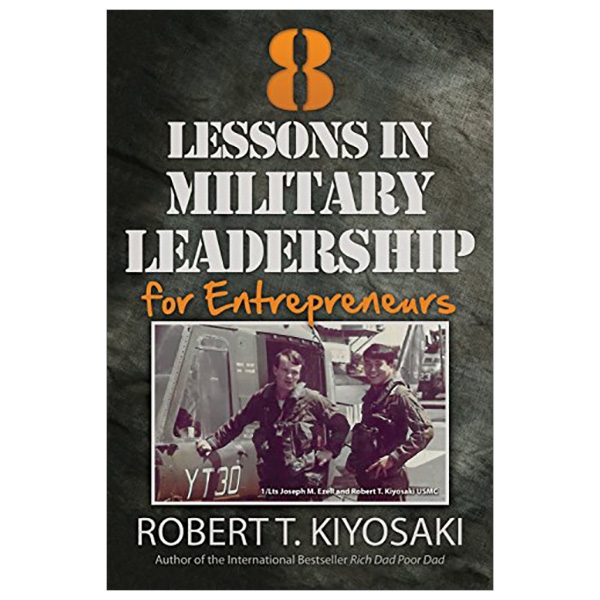
8 Lessons In Military Leadership For Entrepreneurs
Robert Kiyosaki’s new book 8 Lessons in Leadership draws from his years at the Merchant Marine Academy at Kings Point and his service in the United Sates Marine Corps. With compelling stories and examples and a engaging way of comparing and contrasting two very different cultures and value systems, Robert shares the challenges he faced in transitioning to civilian life&hellipwhere chain of command and team-over-self—once so black and white—were muddy and distorted. "Permission to speak freely, sir?" Count on it. This is Robert Kiyosaki—and he does just that, in the forthright and no-nonsense style that readers have come to expect and appreciate.
From Robert's perspective, military training shapes lives and supports entrepreneurship. The training, discipline, and leadership skills taught in the military can be leveraged for huge success in the civilian world of business.
Highlights of 8 Lessons in Leadership include sections on Mission and Team, Discipline, Respect, Authority, Speed, the Power of Connectivity, Leaders as Teachers, Sales and Leadership.

If you don't plan on working hard all your life this is the book for you. If you're ready to retire (or would like to retire early enough to enjoy the retirement years) you can learn from Robert's story of how he and his wife Kim started with nothing and 'retired' financially free in less than 10 years.
Sách kỹ năng sống, Sách nuôi dạy con, Sách tiểu sử hồi ký, Sách nữ công gia chánh, Sách học tiếng hàn, Sách thiếu nhi